
- All
- Product Name
- Product Keyword
- Product Model
- Product Summary
- Product Description
- Multi Field Search
Views: 0 Author: Site Editor Publish Time: 2026-01-23 Origin: Site


Production delays often start at roll changeovers.
In blank self-adhesive processing, downtime quickly reduces output.This article focuses on the Rotary Die Cutting Machine and its role in continuous label converting.You will learn how double winding designs
directly improve productivity and workflow stability.
Blank self-adhesive materials are multi-layer systems, not single sheets. Their structure creates unique stability requirements during processing on a Rotary Die Cutting Machine. Each layer plays a different mechanical role during cutting and rewinding. The interaction between layers means cutting accuracy depends on balanced pressure and alignment, not force alone.
Key structural layers and their influence on cutting stability include:
● Face material It provides surface strength and printability. Its stiffness affects how cleanly edges are cut.
● Adhesive layer It creates resistance during cutting and can cause drag if pressure is uneven.
● Liner It supports the structure but is often thin. Excess pressure may lead to deformation or tearing.
Blank self-adhesive rolls present handling challenges that directly impact productivity. Unlike rigid sheets, roll-based adhesive materials react quickly to tension changes. Even small variations affect cut position and waste removal. A Rotary Die Cutting Machine must manage these factors together, not in isolation.
Common process-level challenges include:
● Tension sensitivity High tension stretches the liner. Low tension causes misregistration.
● Liner deformation Thin liners can wrinkle or break under unstable pressure.
● Waste matrix control Poor separation leads to tearing or adhesive buildup during removal.
Rotary die cutting matches the natural workflow of blank self-adhesive materials. These materials are produced, printed, and finished in roll form. The Rotary Die Cutting Machine follows the same roll-to-roll logic. Its design supports uninterrupted material movement from feeding through cutting to rewinding.
The alignment between process logic and machine operation can be summarized as follows:
Processing requirement | Rotary die cutting response |
Continuous web movement | Constant rotary motion |
Stable cut depth | Synchronized feeding and rotation |
Controlled waste removal | Predictable separation path |
Roll-based output | Integrated rewinding workflow |
Unlike intermittent cutting methods, rotary systems maintain a steady processing rhythm. This stability is critical for adhesive materials, where interruptions increase waste and reduce consistency. By matching the material’s natural behavior, rotary die cutting supports reliable productivity without introducing unnecessary stress points.
Continuous die cutting keeps material moving at a constant speed through the Rotary Die Cutting Machine. This uninterrupted motion reduces time losses caused by frequent starts and stops. It also stabilizes web behavior, which is critical for roll-based label materials. Intermittent processing often introduces delays during alignment and restart. These pauses increase handling time and disrupt tension balance. Continuous rotation allows cutting, slitting, and rewinding to proceed in one flow, which supports higher effective output.
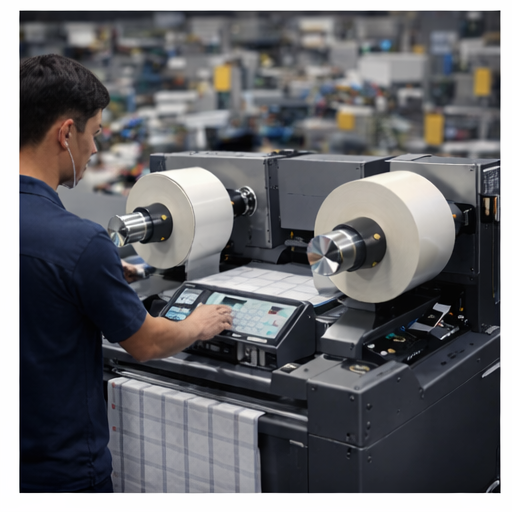
Key productivity differences include:
● Fewer stoppages during operation
● Reduced setup recovery time
● More predictable processing rhythm
Cutting accuracy must remain stable even when the machine runs continuously. A Rotary Die Cutting Machine maintains accuracy by applying steady pressure between the die and anvil. This approach avoids sudden force changes that can distort blank self-adhesive materials. Stable alignment also plays a major role. When feeding speed and rotation stay synchronized, cut positions remain consistent across the entire roll. This consistency reduces rework and material loss.
Accuracy under continuous operation depends on:
● Consistent pressure distribution
● Stable web alignment
● Controlled material feeding
Waste matrix removal directly affects productivity in label production. Poor waste handling slows down the process and increases manual intervention. A Rotary Die Cutting Machine supports efficient waste removal through controlled separation paths and steady web movement. Continuous motion helps the waste matrix peel away smoothly from the liner. This reduces tearing and adhesive buildup, which often cause interruptions. Fewer interruptions lead to better material utilization.
Common efficiency gains include:
● Cleaner matrix separation
● Lower risk of adhesive residue buildup
● Reduced need for operator adjustments
Productivity requirements vary between short runs and high-volume production. Continuous rotary die cutting adapts well to both scenarios. For short runs, reduced setup disruption improves turnaround time. For high-volume blank label production, uninterrupted operation supports stable output over long periods. The table below outlines how productivity performance differs by scale:
Production scale | Productivity impact |
Short runs | Faster stabilization after setup |
Medium runs | Consistent cutting with fewer stops |
High-volume runs | Sustained output and reduced downtime |
Blank self-adhesive labels are usually processed in roll form from preparation to finishing. In label stock preparation, the focus is on stable shape cutting and clean separation. In post-printing die cutting, registration accuracy becomes more critical because printed graphics must align with the cutting pattern.
A Rotary Die Cutting Machine fits both scenarios because it follows a continuous roll-to-roll workflow. It allows material to move through cutting and rewinding without repeated repositioning, which reduces adjustment time between batches.In practice, these scenarios often differ in operational emphasis. Label stock preparation prioritizes consistency over speed, while post-printing operations focus on alignment stability under continuous motion.
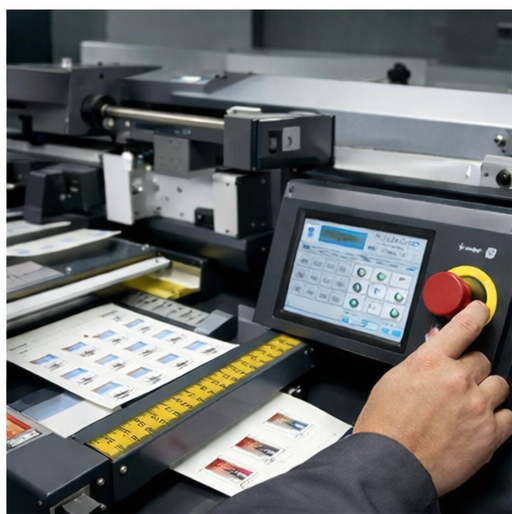
Productivity is not defined by machine capability alone. It depends on how well configuration matches actual production behavior. Run length determines how often roll changes interrupt the workflow. Roll size affects handling effort and tension stability. Changeover frequency shapes the overall production rhythm.
When configuration does not match these factors, efficiency losses appear quickly. Short runs suffer from excessive setup time, while long runs expose instability if conditions drift.The relationship between configuration and productivity can be viewed as:
Production factor | Productivity impact |
Short run length | Faster stabilization is critical |
Large roll size | Tension control becomes more sensitive |
Frequent changeovers | Workflow continuity is harder to maintain |
Material behavior sets practical boundaries for productivity. Thickness variation across a roll affects cutting depth consistency. Adhesive behavior introduces drag and influences waste separation. Liner strength limits how much tension the web can tolerate during continuous operation.
Pushing speed without accounting for these properties often reduces overall efficiency. Liner deformation or unstable waste removal causes interruptions that offset any theoretical output gain.Key material-related constraints include:
● Variation in face material thickness
● Adhesive tack and flow response
● Liner tensile strength and flexibility
Stable productivity comes from respecting material limits, not forcing uniform settings across different materials.
Label production rarely ends at die cutting. Printing, slitting, and rewinding are closely connected stages. Productivity improves when these stages operate as a coordinated system rather than isolated steps.
A Rotary Die Cutting Machine supports this coordination by maintaining predictable web behavior. When feeding speed, slitting width, and rewinding tension are aligned, material transfer becomes smoother and interruptions decrease.Typical integration points include printing output alignment, slitting width coordination, and rewinding synchronization. When these elements are balanced, the entire post-processing workflow benefits from steadier throughput.
In label post-processing, configuration choice shapes how a Rotary Die Cutting Machine is operated and managed. Standard configurations rely more on manual adjustment. Operators control setup, alignment, and monitoring during production. This approach suits stable materials and shorter runs, where frequent changes are limited. Automatic configurations introduce higher control consistency. They reduce reliance on manual intervention and help stabilize workflow during longer runs. The difference is not about speed alone, but about how consistently the process can run without interruption.
Key differences in operational control include:
● Standard configurations
○ Manual setup and adjustment
○ Higher operator involvement
○ Flexible for small batches
● Automatic configurations
○ System-assisted control logic
○ Reduced intervention during operation
○ More stable workflow for continuous production
Both configurations serve practical roles. The choice depends on production rhythm and material sensitivity.
Automation functions support productivity by keeping operating conditions within stable ranges. In a Rotary Die Cutting Machine, these functions focus on control rather than output claims. Counting functions help track production length and batch size. They support planning and reduce unexpected stops. Tension control plays a central role when processing blank self-adhesive materials. Stable tension prevents liner deformation and misalignment. Safety logic adds another layer by reducing risk during abnormal conditions. These functions work together to protect workflow continuity.
Common automation functions related to stability include:
● Counting and length tracking
● Tension regulation during feeding and rewinding
● Safety stop logic under abnormal load or alignment conditions
The value of automation lies in predictability. Stable conditions allow productivity gains to be sustained rather than disrupted.
Within label post-processing systems, rotary die cutting machines are positioned to support roll-based finishing tasks such as cutting, waste removal, and rewinding. Their role is defined by how they connect with printing, slitting, and downstream handling stages rather than by standalone operation.
In this context, Zhejiang GREENPRINT Machinery Co.,LTD. organizes rotary die cutting machines as part of a broader label-focused post-processing workflow. The emphasis remains on process coordination and operational stability instead of individual machine performance.
Double winding systems reduce downtime
and support continuous label processing.A Rotary Die Cutting Machine improves stability
for blank self-adhesive material converting.With precise control and integrated workflows,
productivity matches real production demands.Zhejiang GREENPRINT Machinery Co.,LTD.
delivers reliable die cutting solutions that add practical value.
A: A Rotary Die Cutting Machine enables continuous cutting and rewinding, reducing downtime during roll changeovers.
A: Double winding is required on a Rotary Die Cutting Machine for long production runs with frequent roll changes.
A: A Rotary Die Cutting Machine uses controlled tension systems to maintain material stability during cutting and rewinding.
A: Rotary Die Cutting Machine costs depend on automation level, winding configuration, and long-term maintenance needs.
A: A Rotary Die Cutting Machine may require precise setup to avoid liner damage in high-speed operations.


