
- All
- Product Name
- Product Keyword
- Product Model
- Product Summary
- Product Description
- Multi Field Search
Views: 0 Author: Site Editor Publish Time: 2026-01-24 Origin: Site


Cutting quality often fails for simple reasons. Pressure and alignment are usually the cause. A Rotary Die Cutting Machine depends on controlled force and stable material positioning. In this article, you will learn how pressure regulation and positioning shape accuracy, waste control, and roll-to-roll stability.
A Rotary Die Cutting Machine operates through continuous rotary motion rather than intermittent pressing. Material feeds from a roll and moves forward at a constant speed. The die cylinder rotates in sync with this movement, allowing cutting to happen without stopping the web. This approach supports stable processing of self-adhesive materials, which can deform under sudden force changes.Continuous motion reduces speed fluctuation and helps maintain consistent contact between the cutting edge and the material surface. For adhesive labels, this stability is essential. It limits stretching, reduces registration drift, and supports uniform results over long production runs.
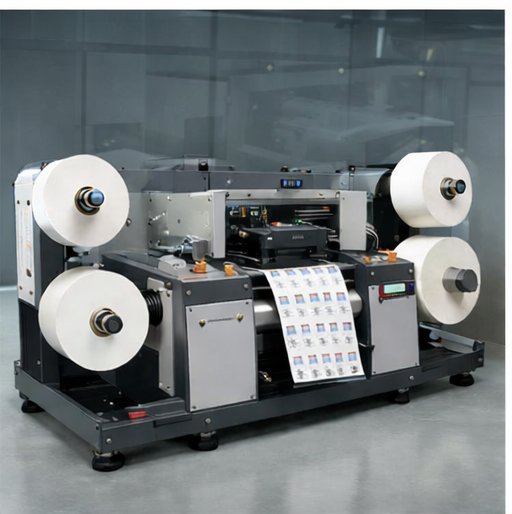
The cutting process depends on controlled interaction between the rotating die cylinder and the supporting anvil or backing surface. The material passes between these components and receives pressure from both sides. The die cylinder applies the cutting profile, while the support component resists force and maintains flat contact.This interaction relies on precise mechanical alignment. If either component shifts, cut depth can vary across the web. In roll-based adhesive processing, uneven support often causes partial cuts or liner damage. Stable support ensures that cutting force transfers evenly through the material layers.
Synchronized motion connects material feed speed and cylinder rotation speed. When they match, the cutting profile meets the same position on the web during every rotation. This alignment keeps part dimensions consistent and repeatable.If synchronization fails, several issues may appear:
● Cuts shift position along the web
● Shapes stretch or compress
● Waste removal becomes unstable For a Rotary Die Cutting Machine,
Cutting pressure determines how deeply the die penetrates the material layers. Too little pressure leaves incomplete cuts. Too much pressure damages liners or accelerates tool wear. Edge definition depends on controlled force applied across the full cutting width.In self-adhesive labels, pressure must cut the face material cleanly while preserving the liner. Stable pressure helps maintain consistent edge geometry and tight dimensional tolerance. Variations often show as rough edges, hanging fibers, or inconsistent part size.
Adhesive materials vary in thickness due to coatings, liners, or layered structures. Pressure adjustment allows the machine to adapt to these differences without changing tooling. Thicker materials require higher force, while thinner constructions need lower pressure to avoid damage.Key factors influencing pressure settings include:
● Face material stiffness
● Adhesive layer compressibility
● Liner thickness and hardness Proper adjustment allows one Rotary Die Cutting Machine to handle different label constructions while maintaining cut quality.
Unstable pressure introduces inconsistency into continuous processing. Even small fluctuations can create defects over long runs. Common issues include:
● Incomplete cutting across part edges
● Liner scoring or breakthrough
● Increased waste during matrix removal
● Reduced die service life These issues rarely appear at once. They often build gradually, making pressure stability difficult to diagnose without close process monitoring.
Repeatability depends on applying the same force at every rotation. Pressure consistency ensures that each cut matches the previous one, even during extended operation. This stability supports predictable output and simplifies downstream processes such as slitting and rewinding.The table below shows how pressure behavior affects process outcomes:
Pressure Behavior | Impact on Cutting | Effect on Production |
Stable | Uniform cut depth | Consistent output |
Gradual drift | Edge variation | Increased waste |
Sudden fluctuation | Liner damage | Process interruption |
Pressure regulation in a Rotary Die Cutting Machine relies on adjustable mechanical systems that control the distance and force between the die and support surface. These mechanisms allow operators to fine-tune cutting force without changing the die itself. Adjustment may occur through calibrated screws, mechanical offsets, or controlled loading elements.Each adjustment changes how force transfers into the material layers. In label processing, this flexibility supports different face stocks and liners within the same production setup. Adjustable regulation helps maintain controlled penetration depth across the full cutting width.
Uniform pressure depends on balanced mechanical contact across the web. Mechanical alignment ensures that force applies evenly from one edge to the other. Control elements stabilize this condition during operation.Key elements that support uniform force include:
● Parallel alignment of rotating cylinders
● Stable bearing support on both sides
● Consistent loading across the die length Together, these elements prevent pressure concentration in localized areas. Even force distribution reduces uneven cuts and supports predictable die cutting accuracy.
Adhesive labels vary in structure and compressibility. Pressure settings must match these characteristics to avoid cutting defects. A single pressure value rarely fits all constructions.Factors that influence pressure selection include:
● Face material stiffness
● Adhesive layer thickness
● Liner hardness and recovery behavior Softer materials compress more and need lower force. Rigid laminates require higher pressure to reach full cut depth. Proper adjustment balances clean cuts with liner protection.
Extended runs amplify small pressure deviations. Over time, heat, wear, and material variation can change cutting conditions. Pressure regulation helps offset these changes by maintaining consistent force.Die cutting accuracy depends on stable cut depth from the first rotation to the last. When pressure drifts, dimensions shift gradually. Stable regulation limits this drift and supports repeatable output throughout long roll-to-roll processing cycles.
Monitoring pressure stability helps detect problems before defects appear. In high-speed operation, visual inspection alone is insufficient. Operators rely on indirect indicators to assess pressure behavior.Common monitoring approaches include:
● Tracking cut quality at regular intervals
● Observing liner condition during rewinding
● Checking matrix removal consistency These signals reflect pressure balance across the web. Early detection allows adjustment before waste accumulates.
Pressure adjustment has practical limits. Excess force increases wear and risks liner damage. Insufficient force creates incomplete cuts. The usable range depends on machine structure and material behavior.The table below outlines common pressure boundaries and their effects:
Pressure Level | Cutting Result | Process Impact |
Too low | Incomplete cuts | Poor separation |
Balanced | Clean cut depth | Stable output |
Too high | Liner damage | Tool wear |
In a Rotary Die Cutting Machine, material alignment defines how reliably the web enters and exits the cutting zone. Adhesive label materials often combine thin face stocks, elastic adhesive layers, and stable liners. This layered structure reacts quickly to lateral drift. If alignment shifts, the cutting profile no longer meets the intended position on the web. Over long runs, small deviations accumulate and result in visible dimensional inconsistency. Stable alignment keeps each rotation predictable and supports consistent label geometry across the entire roll.
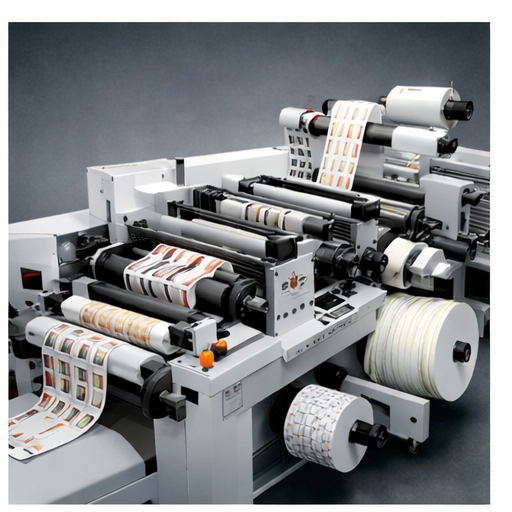
Accurate positioning plays a direct role in matrix stripping and rewinding behavior. Waste removal relies on controlled separation angles and steady tension paths. When the web stays centered, waste strips peel smoothly and maintain uniform width. Misaligned material changes peel angles and increases local stress, which often causes tearing or incomplete removal.Finished roll quality reflects the same principle. Aligned material winds evenly, produces flat roll edges, and avoids telescoping. These factors influence handling efficiency and downstream processing reliability.
Misalignment rarely stops at the cutting stage. Its effects appear more clearly during slitting and rewinding, where edge reference becomes critical. The table below outlines common consequences:
Misalignment Condition | Slitting Impact | Rewinding Impact |
Lateral drift | Uneven slit widths | Edge stepping |
Gradual skew | Width variation | Telescoping rolls |
Sudden shift | Slit overlap | Roll instability |
Material positioning begins before cutting starts. Structural elements guide the web into a stable path during roll loading and feeding. Their purpose is to establish a repeatable entry position rather than correct errors later.Common elements used at this stage include:
● Fixed side references that center the roll
● Entry plates that flatten the web surface
● Adjustable guides for width changes These structures provide a physical baseline for all subsequent positioning control.
Tension control influences how the material responds to guides and structural references. Excess tension stretches adhesive materials and amplifies drift. Low tension allows wandering and edge instability. Balanced tension keeps the web responsive without distortion.In continuous operation, stable tension supports positioning without constant mechanical correction. It reduces oscillation and helps the material track consistently through the cutting and waste removal zones.
Registration stability links material movement to cutting repeat length. In continuous rotary die cutting, each rotation must meet the same reference point on the web. Registration errors appear as spacing variation rather than immediate cut failure.Over time, unstable registration affects label pitch, waste pattern alignment, and roll appearance. Stable registration ensures predictable spacing and supports consistent downstream handling.
Material positioning does not operate independently from pressure regulation. Changes in cutting pressure alter material compression and contact behavior. These changes can influence lateral tracking and edge position.Effective coordination focuses on process interaction rather than isolated adjustment:
● Alignment checks after pressure changes
● Monitoring edge position during force variation
● Maintaining even contact across the web width This coordination helps preserve positioning accuracy while pressure settings adapt to different label structures.
This article explains how pressure regulation and material positioning shape the functional role of a Rotary Die Cutting Machine in label post-processing. Stable pressure and accurate positioning support consistent cuts, reduced waste, and reliable roll handling. Understanding these technical factors helps teams make informed equipment evaluations based on real production needs. Zhejiang GREENPRINT Machinery Co.,LTD. offers rotary die cutting machines designed to deliver controlled pressure, stable material handling, and practical value for label production operations.
A: A Rotary Die Cutting Machine enables continuous cutting, waste removal, and rewinding, supporting stable, high-throughput label post-processing operations.
A: In a Rotary Die Cutting Machine, controlled pressure ensures clean edges, protects liners, and maintains dimensional consistency across varying label materials.
A: A Rotary Die Cutting Machine is preferred for roll-to-roll production requiring high speed, repeatability, and consistent positioning over long runs.
A: Accurate positioning in a Rotary Die Cutting Machine improves slitting accuracy, rewinding stability, and reduces waste caused by edge drift.


