
- All
- Product Name
- Product Keyword
- Product Model
- Product Summary
- Product Description
- Multi Field Search
Views: 0 Author: Site Editor Publish Time: 2026-01-21 Origin: Site


Label finishing often slows production more than printing itself.
Why do efficient presses still face workflow bottlenecks?This article explores how a Rotary Die Cutting Machine addresses post-print inefficiencies.
It explains why integrated slitting improves consistency and production flow.You will learn how integrated die cutting reshapes modern label workflows.
It shows how streamlined processes support stable, repeatable label production.
In roll-to-roll label converting, a Rotary Die Cutting Machine serves as the core finishing unit that transforms printed webs into usable label formats. It operates inline with continuous material flow, allowing cutting to occur without stopping the web. This continuous motion supports stable output and consistent dimensional control across long production runs. The machine’s role is not limited to shape cutting. It also supports precise registration between printed graphics and cut contours, which is critical for label usability. By working directly on rolls, it minimizes intermediate handling and reduces alignment risks introduced by batch-based processes. From a production perspective, the Rotary Die Cutting Machine acts as a bridge between printing and final roll preparation. It enables converters to move from printed material to application-ready label rolls within a controlled and repeatable workflow.
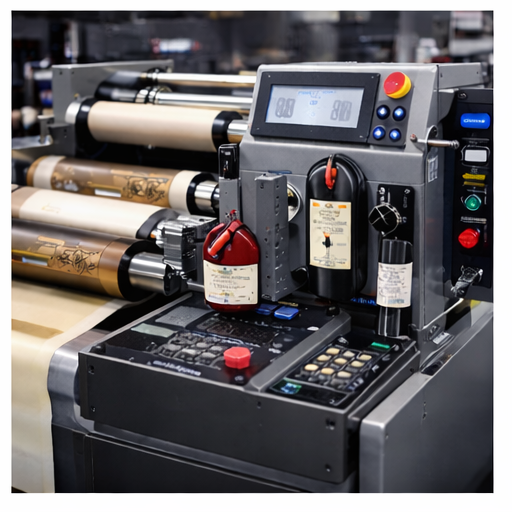
Rotary die cutting is widely used because it adapts well to many label materials supplied in roll form. Material behavior under continuous pressure and motion determines suitability. Commonly processed materials include:
● Pressure-sensitive paper labels with release liners
● Film-based labels such as PET, PP, and PE
● Laminated label structures combining face stock and adhesive layers
● Specialty substrates used for durable or functional labels In terms of formats, rotary die cutting supports both kiss-cut and full-cut label designs. Kiss-cutting allows labels to remain on a liner for easy dispensing, while full-cutting separates labels or sheets entirely. The Rotary Die Cutting Machine handles these formats while maintaining stable web tension, which helps protect adhesive performance and edge quality during downstream use.
Rotary die cutting performs best in scenarios where consistency and throughput are required. It is commonly applied in medium- to high-volume label production where repeated shapes are produced over extended runs. Continuous operation reduces start-stop cycles, which helps stabilize quality and output rates. Typical effective scenarios include:
● Standardized label designs used across multiple product batches
● Jobs requiring consistent cut accuracy across long roll lengths
● Production lines that benefit from inline finishing rather than offline processing In these environments, the Rotary Die Cutting Machine supports predictable scheduling and repeatable results. Its ability to remain synchronized with upstream printing processes makes it suitable for operations focused on process continuity rather than frequent manual intervention.
Integrated die cutting and slitting is most suitable when label widths, formats, and production flows are stable. Inline slitting works well when finished rolls need to be delivered at predefined widths without secondary handling. This approach simplifies material movement and reduces transfer-related risks. However, alternative processes may be considered in certain situations. Extremely short runs, frequent format changes, or experimental label designs may benefit from more flexible or modular finishing methods. Very thick or rigid materials may also require different cutting approaches. Understanding these boundaries helps align equipment choice with production goals. When applied within its suitable scope, the Rotary Die Cutting Machine with integrated slitting supports efficient, controlled, and scalable label production without unnecessary process complexity.
Label production begins with stable web handling. In a Rotary Die Cutting Machine, material feeds from an unwinder into a continuous path. The objective is smooth movement without stretching or lateral drift. Web guiding systems maintain edge alignment as the roll advances, which is critical for accurate cutting registration. Tension control balances pull forces across the entire web width. Stable tension keeps printed graphics aligned with cutting contours. When tension fluctuates, the web may deform, causing uneven cuts or liner damage. Reliable feeding and guiding form the foundation for consistent downstream cutting and finishing operations.
The Rotary Die Cutting Machine operates through synchronized rotational motion. A cylindrical die carries the cutting profile, while a supporting cylinder holds the material in position. Both rotate together at matched speed, allowing cutting to occur continuously rather than in cycles. The basic operating sequence follows a clear order:
● The web enters the cutting zone at a controlled speed
● The rotating die applies pressure along the defined cutting path
● The web exits the cutting section without stopping This continuous process supports repeated, evenly spaced cuts. It is well suited to label production that requires uniform shapes across long roll lengths.
Adhesive label production commonly uses two cutting approaches. Kiss-cutting trims only the face material, while full-cutting passes through all material layers. The Rotary Die Cutting Machine supports both methods by adjusting cutting depth rather than changing workflow structure. The selection depends on how labels will be handled after cutting. The comparison below clarifies the functional differences.
Cutting Type | Cutting Depth | Liner Status | Typical Label Handling |
Kiss-cutting | Face stock only | Liner remains intact | Labels stay on liner for dispensing |
Full-cutting | All material layers | Liner is cut through | Labels or sheets are fully separated |
Kiss-cutting is widely used for roll labels intended for automatic application. Full-cutting is applied when labels or sheets must be separated before further handling.
After cutting, excess material surrounds each label shape. This remaining web, known as the waste matrix, must be removed without interrupting production flow. Inline matrix handling pulls waste away as the web advances through the machine. Effective matrix removal prevents material buildup near cutting components. It also keeps label edges clean and reduces the risk of tearing or contamination. In continuous label production, reliable waste handling supports stable speed and minimizes unplanned stoppages.
Cutting consistency depends on precise coordination between rotating cylinders. Synchronization ensures the die and support surface move together at identical speed. Pressure control determines how deeply the die engages the material layers. If pressure is too low, cuts may be incomplete. Excessive pressure can damage liners or tooling. Stable mechanical alignment allows the Rotary Die Cutting Machine to repeat the same cut profile across the entire roll, maintaining edge quality and dimensional consistency.
Once cutting and waste removal are complete, the web moves into output handling. Rewinding forms finished rolls under controlled tension, which helps maintain roll shape and edge alignment. Proper roll formation reduces issues during storage and transport. Output handling also affects downstream processes. Well-formed rolls feed smoothly into inspection, packaging, or labeling equipment. The table below summarizes how each output stage supports production continuity.
Output Stage | Purpose in Production | Impact on Downstream Use |
Rewinding | Forms stable finished rolls | Ensures smooth label feeding |
Roll formation | Maintains even edge alignment | Reduces handling issues |
Downstream readiness | Prepares rolls for next process | Supports inspection or application |
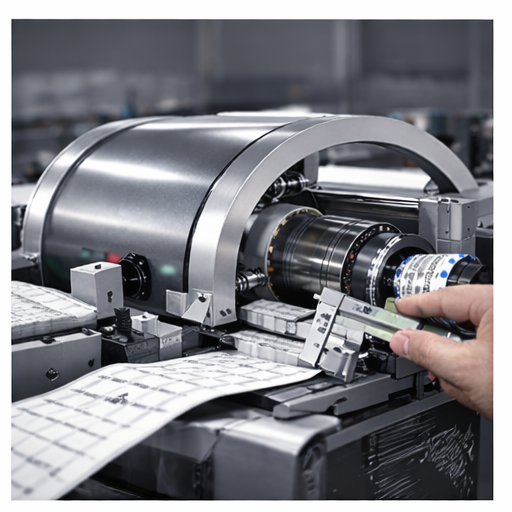
Integrated slitting refers to performing width cutting directly within the same production line as die cutting. In a Rotary Die Cutting Machine, this means the material is slit immediately after cutting, without leaving the continuous web path. The web moves through cutting, slitting, and rewinding in one controlled sequence. This approach keeps material alignment stable throughout processing. It removes the need to stop, unload, or reposition rolls between steps. Within a rotary die cutting workflow, integrated slitting transforms finishing into a single, uninterrupted operation rather than a series of separate tasks.
Inline and offline slitting differ mainly in how material flows through production. Inline slitting remains part of the same machine pass, while offline slitting requires a separate step. The table below highlights the process-level differences without referring to specifications.
Aspect | Inline Slitting | Offline Slitting |
Process flow | Continuous, single pass | Separate secondary operation |
Material handling | No roll transfer between steps | Rolls must be moved and reloaded |
Alignment control | Maintained from cutting stage | Requires realignment |
Workflow complexity | Simplified | More coordination required |
From a process perspective, inline slitting reduces interruptions. Offline slitting offers flexibility but introduces additional handling and alignment checks.
Slitting accuracy determines how finished rolls perform during storage and application. When slit widths remain consistent, rolls unwind smoothly and feed evenly into labeling equipment. Misaligned or uneven slits can cause edge damage or unstable roll edges. In a Rotary Die Cutting Machine with inline slitting, accuracy benefits from shared tension control and guiding. The web does not relax between processes, which helps preserve dimensional stability. This consistency improves roll usability in downstream steps such as inspection, packing, or automatic dispensing.
Every additional handling step introduces risk. Inline slitting reduces these risks by keeping the web under constant control from cutting to rewinding. Operators do not need to remount rolls or adjust guides between machines. Reduced handling lowers the chance of skewed edges, telescoping rolls, or surface contamination. It also simplifies operator responsibilities. In continuous label production, fewer touchpoints translate into more predictable outcomes and fewer corrective interventions.
When die cutting, slitting, and rewinding occur in one system, the production chain becomes shorter and clearer. Material enters as a master roll and exits as finished label rolls. A Rotary Die Cutting Machine configured this way removes intermediate storage and transport stages. This simplification helps teams visualize and manage the entire finishing process. It reduces dependency on multiple machines and minimizes coordination between separate workstations.
Manual transfers between machines consume time and attention. Integrated systems reduce these transfers by design. Operators focus on monitoring one continuous line instead of managing multiple handoffs. Common workflow improvements include:
● Fewer roll loading and unloading steps
● Less manual alignment adjustment
● Reduced need for intermediate quality checks These changes improve overall flow without adding complexity to daily operation.
Integrated systems influence how production schedules are managed. With fewer stages, planners can sequence jobs more directly. Changeovers occur within one line instead of across several machines. Lead times often become easier to predict because fewer variables affect completion. While setup still requires care, the absence of secondary slitting steps reduces scheduling gaps and simplifies coordination between teams.
Continuous systems support stable conditions. Tension, alignment, and cutting depth remain consistent across the run. This stability supports repeatable output from start to finish. In label manufacturing, repeatability matters as much as speed. Integrated workflows allow the Rotary Die Cutting Machine to maintain consistent results across long runs, supporting uniform quality without constant adjustment.
Integrated workflows combine multiple finishing steps in one pass. Traditional setups separate die cutting, slitting, and rewinding into individual stages. Each approach has structural differences. The table below compares workflow characteristics rather than performance claims.
Workflow Aspect | Integrated Setup | Traditional Setup |
Number of process stages | Fewer, combined | Multiple, separate |
Material movement | Continuous | Step-by-step |
Alignment continuity | Maintained | Re-established |
Coordination effort | Lower | Higher |
Integrated setups emphasize flow continuity, while traditional setups emphasize modular flexibility.
Labor coordination changes with system design. Integrated lines concentrate tasks into one operating zone. Operators monitor process flow rather than manage transfers. Traditional setups distribute tasks across machines. This requires coordination between operators and careful timing of material movement. From a workflow perspective, integrated systems reduce handoff points and simplify communication.
Factory space often limits expansion. Integrated systems reduce the number of machines required, which can simplify layout planning. Fewer machines also mean fewer utility connections and walkways. Operational complexity decreases when processes share controls and guiding systems. Traditional setups may require more space and more adjustment points, increasing layout and maintenance complexity.
Integrated systems favor consistency. By keeping material under unified control, they reduce variation introduced by stops and transfers. This stability supports predictable output across runs. For label producers focused on repeatable formats and steady volumes, integrated workflows align well with operational goals. In these contexts, the Rotary Die Cutting Machine becomes a central element in maintaining efficient, controlled label production.
Integrated slitting strengthens the practical role of a Rotary Die Cutting Machine.
It simplifies finishing steps and supports stable, consistent label production.By combining cutting, slitting, and rewinding, workflows become clearer to manage.
Label producers gain better control over efficiency and repeatability.Manufacturers such as Zhejiang GREENPRINT Machinery Co.,LTD. focus on integrated solutions.
Their equipment helps deliver streamlined label converting and reliable production value.
A: A Rotary Die Cutting Machine performs continuous cutting and slitting, reducing handoffs and stabilizing label production flow.
A: A Rotary Die Cutting Machine suits stable formats, consistent volumes, and roll-to-roll label processing.
A: A Rotary Die Cutting Machine keeps alignment and tension consistent, which reduces rework and handling time.
A: A Rotary Die Cutting Machine impacts tooling, maintenance planning, and long-term workflow efficiency.
A: A Rotary Die Cutting Machine may be less flexible for frequent format changes or very short runs.


