
- All
- Product Name
- Product Keyword
- Product Model
- Product Summary
- Product Description
- Multi Field Search
Views: 0 Author: Site Editor Publish Time: 2026-01-20 Origin: Site


Speed alone does not define efficient label production. Post-press processing often decides final output quality.
In modern roll-to-roll workflows, the Rotary Die Cutting Machine plays a central role. It supports stable, continuous adhesive sticker label finishing.
In this article, you will learn how the YMQA-320 fits into high-speed label workflows.
A Rotary Die Cutting Machine is used after printing to convert adhesive label rolls into finished formats. It operates on roll-fed materials and performs cutting in a continuous motion. This structure allows labels to be shaped accurately without stopping the web. In label post-processing, it handles shape cutting, waste matrix separation, and preparation for rewinding. This method supports stable and repeatable cutting across long production runs. Inline cutting reduces manual handling and fits naturally into automated label workflows.
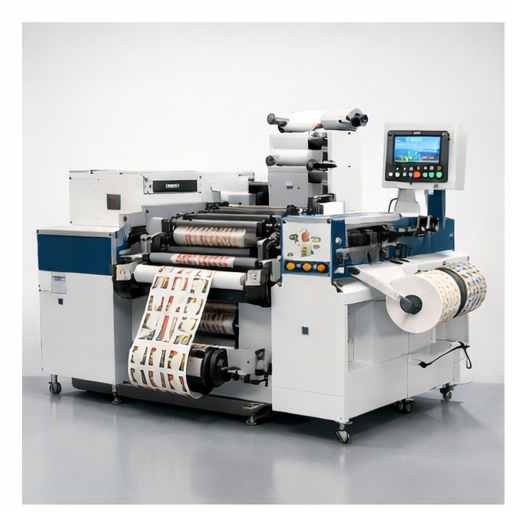
Typical post-processing tasks include:
● Cutting printed label rolls into defined shapes
● Separating labels from waste matrix material
● Preparing finished rolls for downstream slitting or rewinding
Adhesive sticker labels are produced on flexible substrates that perform best in roll-to-roll workflows. Continuous roll processing maintains stable material tension during printing and cutting. It also reduces start-stop actions that often cause misalignment or waste. A Rotary Die Cutting Machine matches this material behavior. It cuts while the web moves forward at a steady speed, supporting predictable output and consistent quality. This approach aligns with how labels are stored, transported, and applied in later stages.
Continuous roll processing is preferred because it:
● Maintains consistent material tracking
● Supports uninterrupted production cycles
● Reduces handling between process steps
Label post-processing involves several technical requirements beyond basic cutting. A Rotary Die Cutting Machine addresses these needs through synchronized motion and controlled cutting depth. This ensures consistent results across varying roll lengths. Such consistency is essential for adhesive materials that combine face stock, adhesive, and liner layers. Inline operation simplifies workflow design by reducing intermediate rewinding and manual adjustment. This structure improves process stability during long runs.
Key post-processing requirements include:
● Accurate cutting without damaging release liners
● Stable waste matrix separation
● Compatibility with continuous slitting and rewinding processes
A Rotary Die Cutting Machine cuts adhesive labels using a rotating die matched to the label shape. The die contacts the moving material at a controlled depth. It cuts the face stock while leaving the liner intact. This layered control is essential for self-adhesive structures. Cutting force remains consistent as the die rotates, avoiding pressure fluctuations caused by intermittent motion. The principle relies on synchronized rotation rather than vertical pressing.
Key elements of the working principle include:
● Continuous die rotation instead of intermittent strokes
● Controlled cutting depth for layered adhesive materials
● Stable contact between die and moving web
Adhesive labels move through the machine as a continuous web. The Rotary Die Cutting Machine matches die rotation speed to web speed. This synchronization allows cutting without stopping material flow. Continuous feeding supports steady alignment and reduces tension fluctuation. Because the web never pauses, the cutting motion remains uniform throughout the run. This structure suits roll-to-roll label workflows.
The continuous motion process relies on:
● Stable web tension during transport
● Matched rotational speed between die and material
● Consistent material guidance through the cutting zone
After cutting, excess material remains around the labels. This waste matrix must be removed cleanly. In a Rotary Die Cutting Machine, waste separates as the web moves forward and follows a different path from finished labels. Proper removal prevents tearing or label lifting and keeps adhesive surfaces clean. Stable separation is essential for downstream slitting and rewinding.
Waste matrix removal focuses on:
● Clean separation without pulling label edges
● Stable waste flow away from finished labels
● Continuous removal during long production runs
Cutting consistency depends on alignment, pressure balance, and motion stability. A Rotary Die Cutting Machine must maintain these conditions throughout extended runs. Material variation also affects results. Changes in thickness or stiffness require controlled handling. Environmental and operational conditions influence performance, making steady tension and clean die surfaces essential.
Main factors influencing consistency include:
● Web tension control during processing
● Die condition and surface cleanliness
● Material uniformity across the roll
In adhesive sticker production, high-speed operation refers to stable output over time rather than peak speed values. A Rotary Die Cutting Machine must maintain cutting accuracy while material moves continuously. Speed is meaningful only when quality remains consistent. In label production lines, stable high-speed operation supports volume targets without increasing waste.
High-speed operation usually involves:
● Continuous cutting without frequent stops
● Stable alignment across long material lengths
● Predictable output during normal shifts
Material stability is critical during continuous die cutting. Adhesive labels use layered structures that respond to tension changes. A Rotary Die Cutting Machine must guide the web evenly through the cutting zone. Uneven tension may cause stretching or misalignment. Stable handling supports consistent cutting depth and prevents liner stress.
Key elements that support stability include:
● Consistent web tension during transport
● Smooth guidance through rollers and cutting areas
● Proper alignment before entering the die section
Extended processing runs are common in label production. Production continuity means maintaining steady output over long periods. A Rotary Die Cutting Machine supports this through synchronized motion. Continuous rotation avoids frequent start-stop cycles. Reduced intervention helps preserve alignment and cutting consistency, improving overall line efficiency.
Production continuity relies on:
● Stable cutting conditions over time
● Minimal need for manual correction
● Consistent waste removal and rewinding
Setup and changeover affect daily productivity. Rotary die cutting setups focus on aligning dies and materials correctly. Efficient changeover reduces downtime between jobs. Material changeover requires attention to thickness and adhesive behavior. Operators adjust cutting depth and tension accordingly to maintain quality.
Typical changeover considerations include:
● Adjusting cutting depth for different materials
● Resetting web tension for new rolls
● Verifying alignment before restarting production
The YMQA-320 is positioned in label post-processing stages that require continuous roll handling. It operates after printing and before final packaging. In this role, it functions as a Rotary Die Cutting Machine for shaping adhesive labels during steady production. Its positioning suits label lines that prioritize continuity and predictable output.
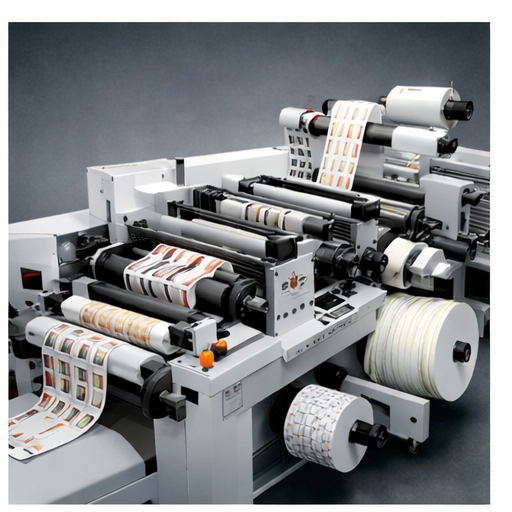
Die cutting and slitting often appear together in label finishing. Integrating these steps reduces intermediate handling. A Rotary Die Cutting Machine that supports both tasks allows labels to move from cutting directly into width separation, simplifying workflow design.
Common workflow advantages include:
● Fewer material transfers between machines
● Reduced handling-related misalignment
● More predictable roll output formats
The YMQA-320 is applied to adhesive sticker materials and blank self-adhesive rolls. These materials share layered structures that require controlled cutting. For blank materials, the machine focuses on shape definition and waste removal. For printed stickers, it follows predefined layouts. Material behavior guides setup and operation in both cases.
Material types commonly processed include:
● Pre-printed adhesive sticker rolls
● Blank self-adhesive label stock
● Roll-fed label substrates with liners
Automation-assisted control supports repeatable operation in label processing. In a Rotary Die Cutting Machine, automated functions help manage tension, counting, and stopping points. These controls reduce reliance on constant manual adjustment and support consistent handling during long runs.
Automation-assisted control typically supports:
● Consistent material tracking
● Predictable run management
● Reduced operator intervention during steady operation
Operational stability is critical during continuous sticker production. A Rotary Die Cutting Machine must maintain alignment, pressure, and material flow throughout extended runs. Stable operation reduces waste accumulation and downtime, supporting reliable output across shifts.
Stability considerations include:
● Steady web guidance through cutting zones
● Consistent cutting depth over long rolls
● Controlled waste removal paths
Label Processing Scenario | Material Type | Processing Focus | Role of the Rotary Die Cutting Machine |
Post-print label finishing | Printed adhesive label rolls | Shape cutting and waste removal | Cuts labels to final shape while maintaining liner integrity |
Blank label converting | Blank self-adhesive material | Shape definition before printing | Prepares label formats for downstream processing |
Inline die cutting and slitting | Adhesive label rolls | Width separation and roll preparation | Combines die cutting and slitting in a continuous workflow |
Long-run sticker production | Standard adhesive materials | Stable, repeatable cutting | Supports continuous operation with minimal intervention |
Multi-format label preparation | Mixed label layouts | Flexible post-processing | Enables different label shapes within roll-based production |
Labels are delivered in specific roll widths. After die cutting, wide webs must be divided into narrower rolls. Slitting prepares labels for storage, packing, or downstream application. A Rotary Die Cutting Machine that supports slitting fits naturally into this process.
Slitting is required to:
● Match final roll widths to application needs
● Prepare labels for automated dispensing systems
● Standardize finished rolls after cutting
A rotary die cutting machine with slitting system follows a continuous workflow. Material moves from die cutting directly into slitting along the same web path. This structure reduces process breaks and keeps alignment consistent throughout finishing.
The workflow structure typically includes:
● Die cutting of label shapes
● Immediate width separation through slitting
● Rewinding of finished label rolls
Combining die cutting and slitting reduces intermediate handling. Without integration, operators must rewind and reload material. A Rotary Die Cutting Machine that integrates slitting keeps material in a single path from cutting to finished rolls, improving consistency during long runs.
Benefits of reduced handling include:
● Fewer manual adjustments between steps
● Lower risk of edge damage or misalignment
● More stable output during extended production
Material flow management is critical in roll-to-roll label processing. Finished labels and waste follow separate paths. In a Rotary Die Cutting Machine, waste matrix removal occurs before or alongside slitting. This separation keeps adhesive surfaces clean and supports smooth rewinding.
Key aspects of material and waste management include:
● Clear separation between labels and waste matrix
● Continuous waste removal during operation
● Stable rewinding of slit label rolls
Rotary die cutting remains a standard solution for adhesive sticker labels. It supports continuous processing and stable post-press workflows.
The YMQA-320 aligns with high-speed roll-to-roll label finishing needs. It focuses on consistency, integration, and reliable long-run operation.
Zhejiang GREENPRINT Machinery Co.,LTD. delivers this solution with practical value.
A: A Rotary Die Cutting Machine is required for continuous roll-to-roll adhesive label finishing in high-volume operations.
A: A Rotary Die Cutting Machine maintains cutting stability during continuous motion, reducing stops and alignment errors.
A: The Rotary Die Cutting Machine is suited for adhesive sticker materials and blank self-adhesive label rolls.
A: Rotary Die Cutting Machine performance depends on material stability, die condition, and controlled setup management.


